Gravhounds Hits Game Pass Day One: Dogs, Gravity, and an Unforgiving Extraction
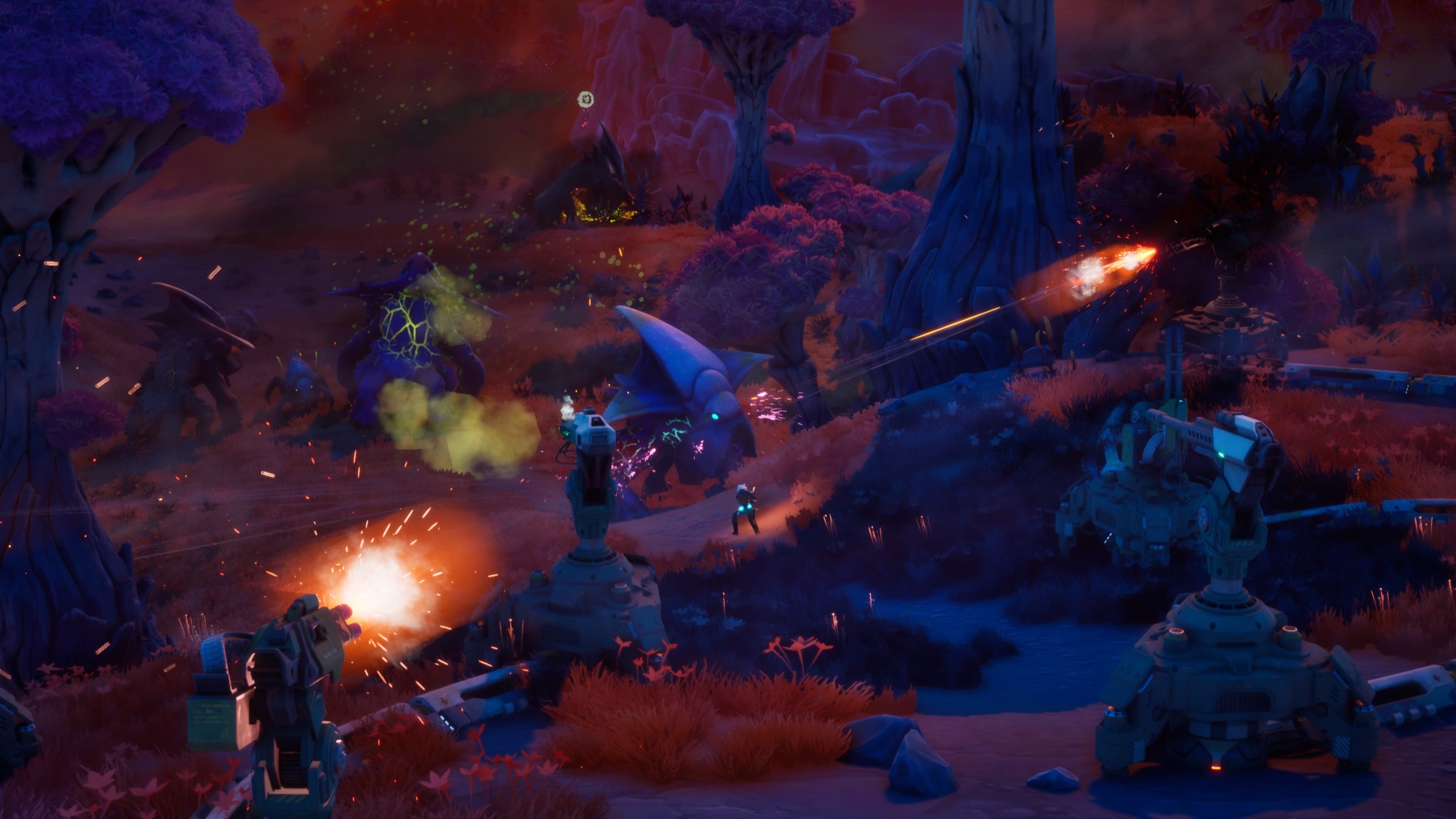
This morning's bulletin only had two minutes to introduce you to Gravhounds, and honestly, the concept deserved more than that. The game launches today, November 2, in Early Access on Steam and in Game Preview on Xbox Series X|S and Xbox on PC, available day one on Game Pass. You play a pack of bio-engineered dogs dropped onto hostile planets, you build a base, you defend it, then you extract everything you can carry before the swarm overwhelms you. It is simple to summarize, and that is exactly what makes the game interesting: every system pushes in the same direction, stay a little longer, or leave while you still can.
Start with the label, because it changes everything. Game Preview on Xbox, and Early Access on Steam, mean the same thing: the game is playable, the core loop is in place, but the product is not finished. Octopus Panic plans about six months of Early Access, possibly more, before a 1.0 release. If you launch Gravhounds today expecting a polished, complete game, you will be disappointed. If you launch it knowing you are testing a game under construction, with balancing that will shift and content that will arrive, you are exactly the intended audience.
What you actually do, mission after mission
Every expedition follows the same contract. You drop in as a squad of one to four players, you gather resources, you build defensive infrastructure, you repel waves of enemies that grow denser and denser, and you decide when to extract. The longer you stay, the higher the rewards climb, and the higher the danger climbs with them. It is the classic extraction-game tension, grafted onto base building, and it is a marriage that makes sense: your base is not scenery, it is your bet made material. Every turret, every generator, every fabricator placed on the ground tells the swarm: I am staying a little longer.
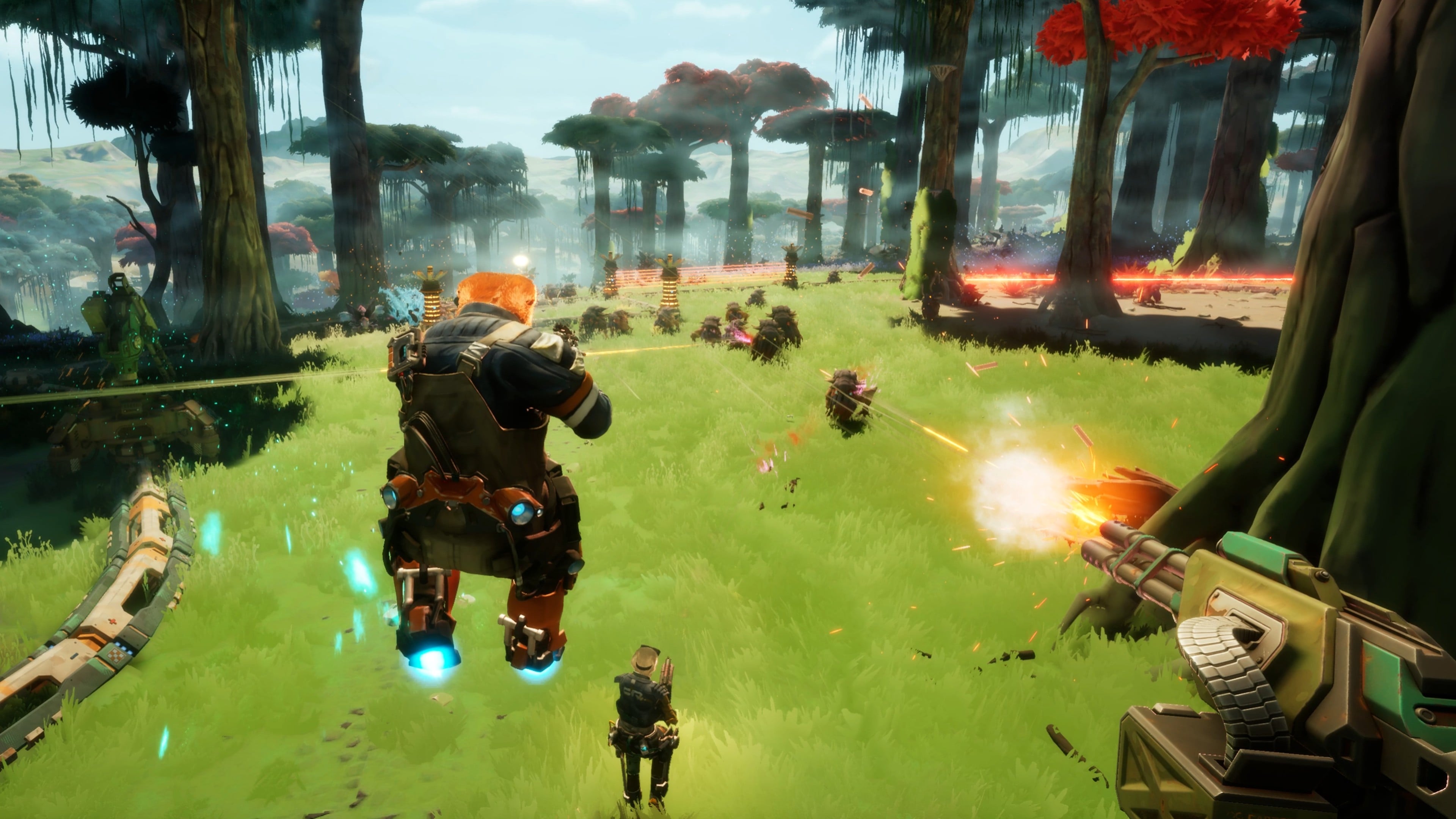
The tool that sets Gravhounds apart from other cooperative building games is the Grav Beam. It lets you launch crates, resources, and even enemies across the battlefield, resupply a teammate from a distance, or turn debris into an improvised projectile. The studio itself jokes about the risk: hauling volatile materials with the Grav Beam can lead, to borrow the idea, to an unexpected loss of Gravhounds. Translation: physics is a double-edged weapon, and your best ideas can blow up in your face. That is the kind of system that generates stories to tell after the match, and cooperative games live or die on those stories.
Around that core, the game stacks layers that feel like a management game disguised as an action game. Pipelines connect your installations, Reward Pods hand out random weapons and upgrades during a mission, and the Mod Deck Builder, added after player feedback, lets you steer what each expedition can offer while keeping an element of surprise. The announced missions set the tone: escort Coffee Cat, an ally based at the hub, through dangerous territory, or hold a refinery while defending a hard point during collection. These are not empty arenas, they are objectives that force the squad to move, split up, then regroup under pressure.
Who makes this game, and why that pedigree matters
Gravhounds is the first game from Octopus Panic, an independent studio founded by veterans of 343 Industries and DICE, led by Josh Holmes, former creative director of Halo 4 and former head of Halo Studios. Co-founder Scott Sims sums up the studio philosophy in one sentence: get back to the heart of development, spend time making games, stay small and close to players. The studio is self-funded and self-published, which gives it the freedom to build Gravhounds as it sees fit, with no publisher to impose a schedule or a business model.
That pedigree guarantees nothing about the quality of the game, and that needs to be said clearly. Veterans of big franchises have delivered disappointing first games before. But it explains two things: where the obsession with physics and multiplayer chaos comes from, and why the studio's communication insists so much on listening. It is also a pedigree that makes the Early Access bet easier to read: this studio knows what a live-service game is, and it chose to grow with its players rather than hide until release.
What Early Access means, in concrete terms
Here is the honest list, taken from the studio's own pages, before you hit install. The Early Access version contains the complete core experience, playable solo or with up to four players, but the studio plans to add Gravhounds, missions, worlds, enemies, weapons, and progression on the road to 1.0. The price has not been announced, and the studio warns it will rise as the game grows, with changes announced in advance. The October demo, which offered four playable Gravhounds, Selene, Zane, Dozer, and Finn, across seven planets in two solar systems, does not carry its progression into Early Access. You start again from zero, and that is normal: the demo was a test, not the start of a campaign.
On the technical side, a few details are worth knowing before you gather your squad. Xbox Series X|S and Xbox on PC players share crossplay with each other, but Steam players cannot yet join Xbox players. Xbox consoles target 60 frames per second. Multiplayer runs on listen servers, which means you can join public sessions, host your own, or stay among friends. None of this is a disaster, but the Steam point is worth checking before you buy on one platform hoping to play with friends on the other.
The most encouraging sign is the testing history. The September open playtest drew more than 20,000 players, for a total of just under 50,000 hours of play, and the October demo directly folded in feedback from those sessions, including the Mod Deck Builder and fixes to planets, saves, audio, and multiplayer stability. A studio that shows its iterations, numbers included, inspires more confidence than a studio that vaguely promises to listen. What remains to be seen is whether the update pace holds for six months, because that is where, not on launch day, Early Access games are won or lost.
Why Game Pass changes the math
Day-one availability on Game Pass is the best possible news for a game like this, and it is worth understanding why. Buying an Early Access game is betting on a promise. Trying it through a subscription you already pay for is trying it with no bet. For Octopus Panic, it is an influx of players on day one, exactly what is needed to stress the servers and balance the swarm. For you, it is the chance to find out whether the loop hooks you before spending another cent.
One nuance, though, because official communication does not settle it. Xbox posts announce Game Pass without naming a tier, while several outlets report availability on the Ultimate and PC tiers. If you are on another tier, check the game's listing in your app before counting on it. Likewise, Xbox Play Anywhere applies: a compatible purchase covers both console and Windows PC, which softens the cost for players who play on both. Game Pass does not make Gravhounds finished, it makes its unfinished state easy to try, and that is a distinction worth its weight in gold for an independent first game.
What to watch in the coming weeks
- How servers and balancing hold up after the launch peak, when casual squads replace hardened testers.
- The real pace of updates: the studio promises to listen via Discord, Steam forums, playtests, and surveys, and it will be judged on actions.
- The arrival of Steam to Xbox crossplay, which will finally unlock mixed squads across the two PC ecosystems.
- The final price and its schedule of increases, announced in advance according to the studio, a test of trust like any other.
My verdict, while I wait to play it at greater length: Gravhounds has the right idea, in the right place, with the right launch ramp. Bio-engineered working dogs, a gravity beam that turns logistics into a weapon, and an extraction that forces you to choose between greed and survival, that is a concept you can remember in one sentence and retell in anecdotes. The risk is not the concept, it is execution over time, and that is exactly what the next six months will measure. If you have Game Pass, the cost of trying is zero. If you do not, the free demo remains the best way to find out whether the pack is for you, before you open your wallet.
Images: Octopus Panic, official Gravhounds screenshots.