If You Pay For It, You Own It: What the Power To The Players Act Actually Says
The button says Buy. It has always said Buy. And for years now, that button has been telling a small, legally precise lie, because what you actually get when you click it is a license, a revocable permission slip that a publisher can take back whenever it wants. On October 15, Representative Ritchie Torres of New York announced a bill that would finally call that what it is. It is called the Power To The Players Act, and our bulletin covered the announcement in about forty seconds. Here is the rest of it, because this one is worth the longer version.
First, the status check, because this matters and it is easy to get wrong. This is a proposal, not a law. Torres announced it on October 15, but as of this writing it has not been formally introduced in Congress, it has no announced cosponsors, and there is no bill text to read yet. What exists is the announcement, a press release, and an interview Torres gave to Kotaku. Everything below comes from those sources. If a detail sounds vague, that is because it still is.
The three rights
Torres frames the bill around three rights, and the slogan is the whole pitch in one line: if you pay for it, you own it. In his words, consumers must have the right to own, the right to play, and the right to transfer the games they buy. Here is what each one would mean in practice.
- The right to own. Buying a digital game would grant ownership, not a license that can expire at any time. The bill directs the Federal Trade Commission to write the regulations that make that real, rather than spelling out every rule itself.
- The right to play. Games with online features would have to offer an offline mode before their servers shut down, so a game does not turn into a dead icon on your dashboard the day support ends.
- The right to transfer. Buyers would keep the right to transfer or resell games they purchased, much closer to swapping discs with a friend than to anything a digital storefront allows today.
Torres put the argument bluntly in his announcement: a game that can be taken away the moment a company pulls the plug is not a purchase, it is a rental disguised as a sale. In his Kotaku interview, he called the bill a restoration to the historical norm of the cartridge and disc era, when buying a game meant it was yours, and he framed it as an affordability issue as prices climb. He also said he hopes it sets a precedent for other digital purchases, like books, movies, and music. The bill itself covers games only.
Why NBA 2K25 is the example
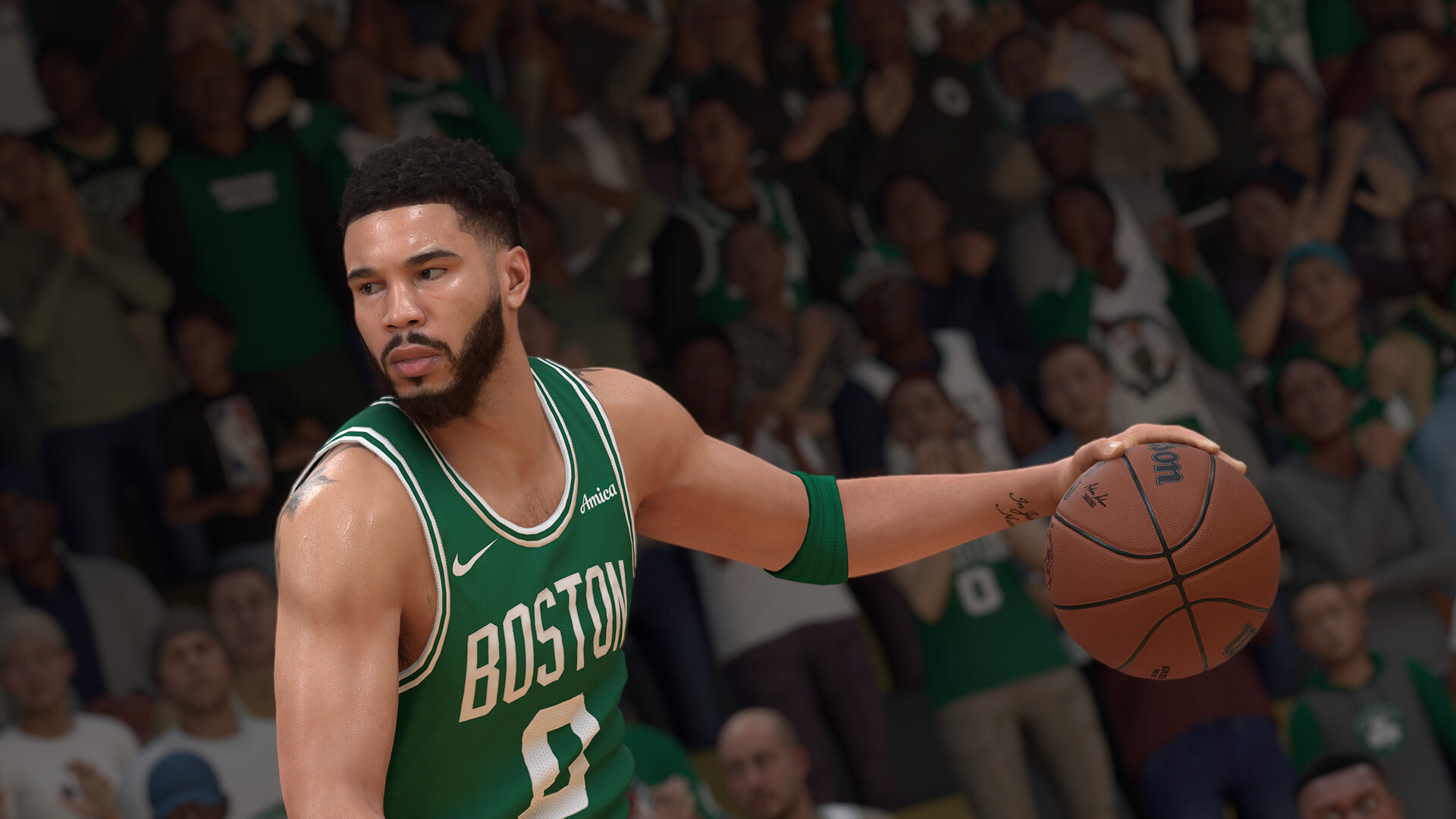
The announcement names one game, and it is a very well chosen one. NBA 2K25 launched in 2024 for $70 and was one of the best-selling games in the United States that year. Now look at its own Steam page. It states plainly that the game will no longer be available for purchase as of October 30, 2026, and that all multiplayer servers will shut down as of December 31, 2026, after which all game functions requiring online servers will no longer function.
That is roughly two years from launch to unplayable, for a game millions of people paid full price for, and for the modes most players actually bought it for. The single-player career content may survive in some form, but the online modes that define a yearly sports title will not. Torres is using 2K25 to make the abstract concrete. This is not a hypothetical about some obscure game from 2011. It is the fifth best-selling game of 2024, and it is about to be switched off.
But seriously, look at this pattern, because 2K25 is not the disease, it is the latest symptom. The industry has been running this play for years, and every time it happened, players were told to accept it as the cost of modern gaming.
How we got here: The Crew and Stop Killing Games
The story really starts in 2024, when Ubisoft shut down the servers for The Crew, a 2014 racing game, and removed it from players' libraries entirely. Around 12 million copies became unplayable. Ubisoft later argued in a French court that players never owned anything, and one executive famously suggested players should get used to not owning games. That did not land the way he hoped.
The backlash became the Stop Killing Games campaign, started by YouTuber Ross Scott, which collected more than 1.2 million signatures on a European petition. The campaign's demand was narrower than Torres's bill and worth understanding on its own terms: not that publishers run servers forever, but that games remain in some functional state once official support ends. An offline patch, community server support, a refund. Something other than a brick.
Since then, the movement has run into the wall every consumer campaign eventually meets. In June, the European Commission declined to propose legislation and instead offered to broker a voluntary code of conduct with publishers, two weeks after meeting with Ubisoft and industry lobbyists behind closed doors. Weeks later, California's Protect Our Games Act, AB 1921, stalled in a state Senate committee, three votes short. That bill would have required 60 days' notice before a shutdown plus a remedy: an offline mode, support for community-run servers, or a full refund. The Entertainment Software Association lobbied against it, calling the requirements technically unworkable.
What did pass, earlier, was California's AB 2426, signed in September 2024 and in force since January 2025. It does not give players ownership. It bans stores from using words like buy or purchase for digital goods that can be revoked, unless they clearly tell the customer they are getting a license. That is why Steam now shows a disclaimer at checkout saying a purchase only grants a license. GOG, the DRM-free store, responded with a banner saying its offline installers cannot be taken away. Disclosure is progress, but it is also an admission: the law now requires stores to tell you that you do not own what you just bought.

What the bill does not do
Here is the part that keeps getting lost. The Power To The Players Act does not require publishers to keep servers online forever. Ars Technica made this point explicitly: some earlier proposals did demand that, and drew criticism over the cost. Torres's bill asks for an offline mode before shutdown, not eternal service. That is a meaningful distinction, and it is the difference between a bill that is merely ambitious and one that is fantasy.
Still, the hard parts are real, and pretending otherwise would be doing the bill no favors.
- The first-sale problem. US courts have generally held that software sold under a license is not covered by the first-sale doctrine, the rule that lets you resell a used disc. A right to transfer implies a resale market for digital games, and no major storefront allows that today. The bill would have to beat or rewrite a lot of case law.
- Retrofitting online-only games. Some games are architected around servers from the ground up. Turning them into offline games is not always a matter of flipping a switch, and the bill's text, when it arrives, will have to define what counts as a good-faith offline mode.
- Licensed content. A game like NBA 2K25 is full of expiring licenses: player likenesses, music, branding. Even a publisher that wants to keep a game alive can run into rights that no longer exist.
- Truly multiplayer games. What does an offline mode mean for a game whose entire point is playing against other people? This is the question the bill's critics will ask first, and it deserves a real answer.
- Congress itself. The vast majority of bills never reach a floor vote. Publishers have already shown they will spend real money fighting proposals far narrower than this one.
Why it matters even if it never passes
Okay, so here is the part where I put the skepticism down for a second, because there is a real argument that this bill matters regardless of its odds. Pressure changes behavior before laws do. After The Crew shutdown, Ubisoft committed to adding offline modes to future titles and released an offline patch for The Crew 2. After California's disclosure law, Steam changed its checkout. The Stop Killing Games campaign never got its legislation, but it got a million signatures, a European Parliament hearing, and a permanent change in how this conversation is framed.
Torres's bill goes further than anything before it, because it goes after the license model itself instead of just managing what happens at end of life. The California bill accepted that games are licenses and asked for a graceful ending. Torres is asking why they are licenses at all. That is a bigger question, and it is the right one, even if the answer takes years.
What to watch next
Three things will tell you whether this bill has legs. First, the formal introduction: a bill number, a text, and cosponsors turn an announcement into legislation. Second, the FTC rulemaking: since the bill directs the FTC to write the actual rules, the details will live or die there. Third, the industry's counter-offer: if publishers respond with a voluntary code or a new round of offline-mode commitments, that is the market telling you the bill scared somebody. Either way, the ownership fight finally has a bill with a name, and that alone changes the conversation.
Images: NBA 2K25 screenshot, 2K via Steam. The Crew 2 screenshot, Ubisoft via Steam.