Tales of Eternia Remastered: 26 Years Later, the Remaster That Gets It Right
Okay, so here is the thing about Tales of Eternia. It has been 26 years since this game came out, and for most of that time, playing it legally meant tracking down a PlayStation disc, a PSP cartridge, or a console old enough to run either one. Now it is out today, October 16, on PlayStation 5, PlayStation 4, Switch, Switch 2, Xbox Series X|S, and Steam, for $29.99, Steam Deck verified. Our bulletin covered the launch in two minutes. Here is the rest of the story, because this one deserves the longer version.
The short version first. This is a real remaster, not a quick upscale. Developer TOSE rebuilt the game from the ground up, restored the localization, re-recorded the English voice work, brought back content that Western players never got, and added a stack of modern conveniences. Critics landed at a 76 on Metacritic and 77 on OpenCritic, with 69 percent recommending it. That is a warm, measured reception, and honestly, it feels about right for what this game is.
The game that got lost in translation
To understand why this release matters, you need the naming mess. Tales of Eternia came out in Japan in November 2000 on the original PlayStation, as the third mainline Tales game, developed by members of Wolfteam. It reached North America in September 2001 under a different name: Tales of Destiny II. That was confusing at the time, and it got worse later, because Japan eventually got an entirely separate game actually called Tales of Destiny 2, which has still never been officially localized into English.
A PSP port followed in Japan in 2005 and in Europe in 2006, this time under the proper Tales of Eternia name. And then, nothing. For two decades, the game sat locked to PlayStation hardware while the series moved on to 3D. It sold roughly 873,000 copies worldwide in its original run and even inspired a 13-episode anime. But if you wanted to play it, you were digging through retro bins.
This remaster finally fixes the identity problem. It is Tales of Eternia, under its real name, on every current platform at once, including Xbox for the first time. It is also the first 2D entry in Bandai Namco's Tales Remastered Project, after three remasters of more modern 3D games. That is a meaningful shift. The project is now reaching back into the series' 2D heyday instead of only polishing its recent past.
What the remaster actually changes
The single biggest upgrade is the writing. The original North American release had notable gaps in its localization, and whole chunks of content, including the skits, the short character conversations that are a Tales signature, were cut or left unvoiced. This version restores the skits with voiced English and Japanese tracks, adds a completely re-recorded English dub, and keeps the Japanese voice option. Reviewers consistently call the restored localization a highlight, and it is easy to see why. A story about two worlds colliding lands a lot harder when the script is complete.
That story, for anyone new to it: Reid Hershel, a young hunter, and his friends Farah and Keele meet Meredy, a girl who speaks a language nobody understands. Their search for her origins takes them across a dimensional boundary to Celestia, a parallel world locked in an age-old conflict with their home, Inferia. Together they try to stop a catastrophic collision between the two worlds known as the Great Fall. It is classic Tales, earnest and character-driven, and it does not require any knowledge of the other games.
On the presentation side, the remaster is built on the 2005 PSP version and offers two visual modes: a remastered look and the original pixel presentation. It runs at up to 4K and 60 frames per second on capable systems. One reviewer was critical of the upscaled character portraits, calling the smoothing a step too far, while others found the remastered mode subtle enough to soften the raw pixels without turning backgrounds into a smear. If you are unsure, the original mode is right there. That choice is the correct call, and more remasters should offer it.
The quality-of-life list is the real headline
Here is where TOSE earned its money. The remaster adds:
- Destination icons and markers for main objectives, side quests, and time-sensitive events. The original game was notorious for leaving you unsure where to go next.
- Toggleable random encounters, so you can switch battles off when you want to explore.
- Battle Retry, which restarts a lost fight without a full reload, plus Quick Recovery after battles.
- High-speed auto-battle for grinding, and a fast-forward option for auto-battles.
- Boost settings, with up to 4x EXP and Gald and 5x damage, so you can tune the grind to your patience.
- New difficulty options, including Mania on a first run, Extreme from the start, and a new Unknown difficulty.
- Nereid's Labyrinth, the bonus dungeon, now accessible during a first playthrough instead of being locked behind New Game Plus.
- A Skit Player and Sound Player for revisiting conversations and music, plus subtitles for skits, minigames, and battle dialogue.
That is a serious list, and it shares a philosophy: fix what aged worst, leave the soul alone. The combat system is untouched at its core. The story is untouched. The friction around the edges is gone.
There is one genuine trade-off. The original PlayStation version supported up to four players in combat. The remaster, built on the single-player PSP version, is strictly single-player on every platform. For most people that will not matter. For the small group with memories of passing controllers around a couch, it is worth knowing before you buy.
The combat still holds up
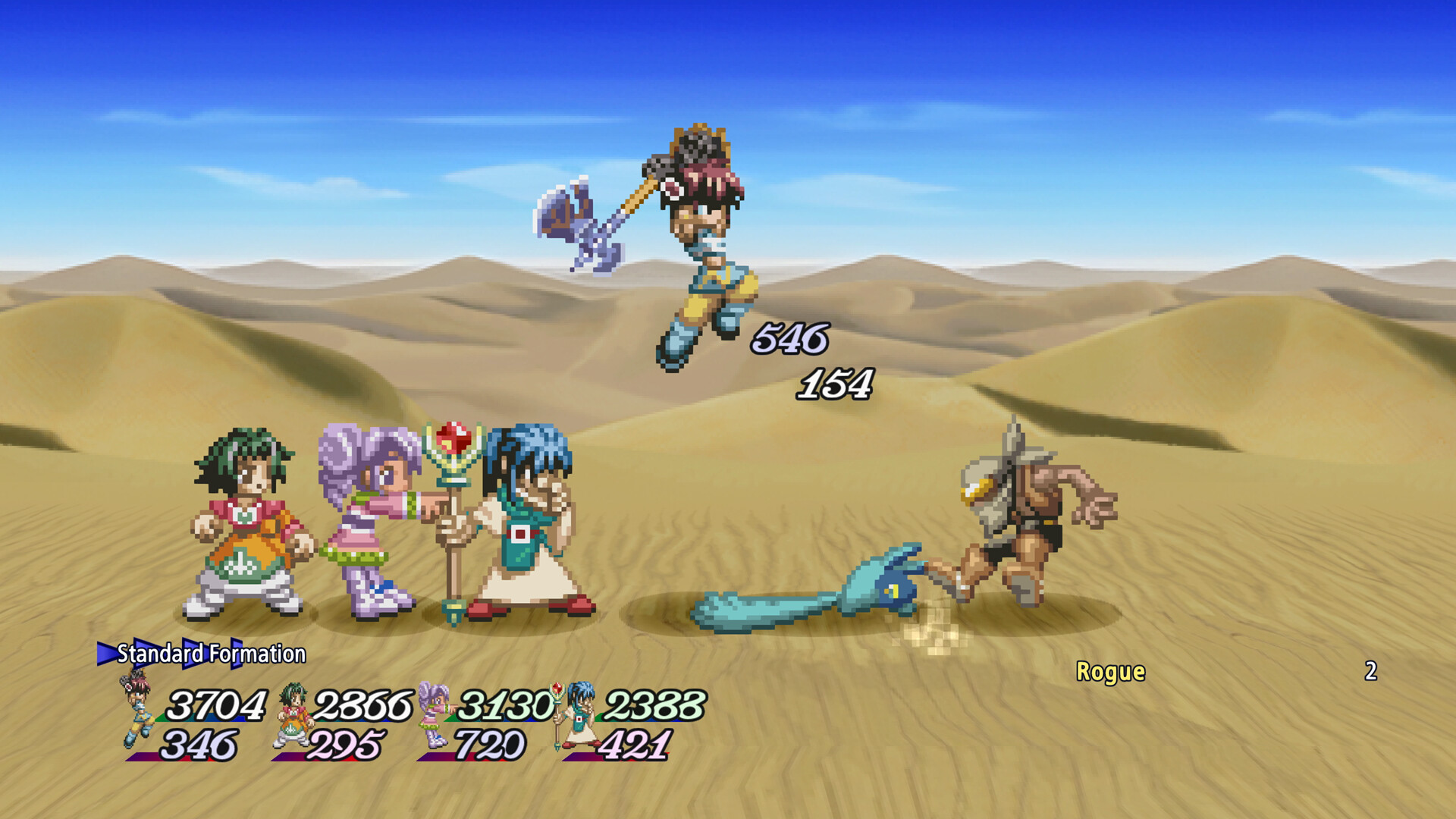
Here is the part that surprised reviewers the most, and it should not have. Eternia runs on the Aggressive Linear Motion Battle System, real-time 2D combat on a side-view plane, with Arte usage, combo chains, and the Craymel Cage system for elemental spirits. Noisy Pixel gave the game an 85 and called the combat sublime. DualShockers gave it an 8 out of 10. ConsoleCreatures matched that 8. Push Square was more cautious at 7 out of 10, noting the pacing can feel slow to genre newcomers.
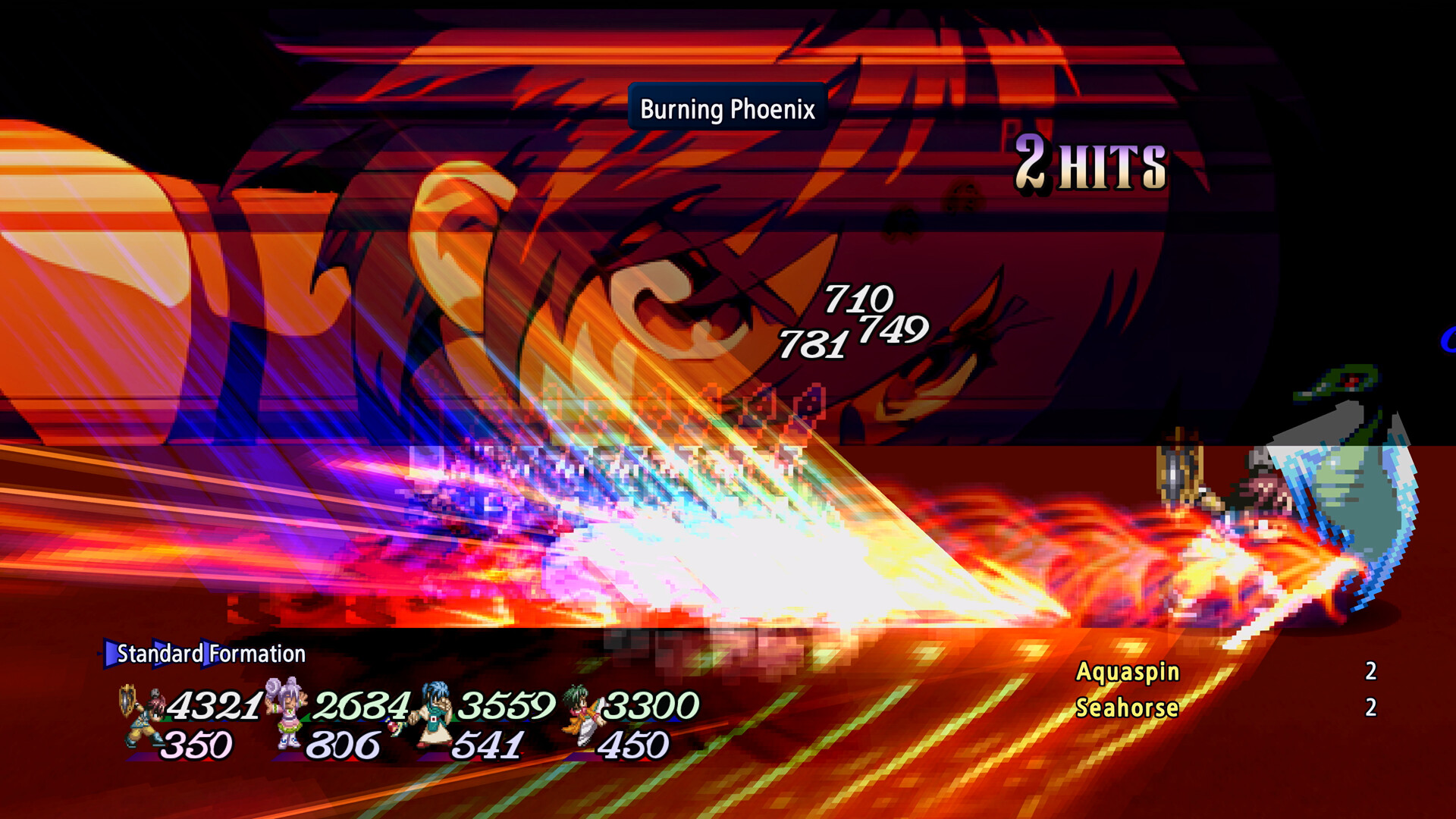
The honest version is that both reactions are correct. Against modern action RPGs, a 2000 combat system shows its age. But the fundamentals, fast movement, readable attacks, big flashy Mystic Artes like Burning Phoenix, are still fun in a way that does not need nostalgia to work. The new conveniences do the rest. Battle Retry means a wipe is a lesson, not a punishment. The encounter toggle means grinding is a choice, not a sentence. One reviewer flagged a Switch-specific analogue stick issue during battles, so if you play handheld, keep an eye on that.
Bottom line
Not every remaster understands the assignment. Some of them just upscale the pixels and call it a day. This one did the harder work: a new script, a new dub, restored content, and a long list of options that respect both your time and the original game. The 76 on Metacritic reflects a real 2000 game with real 2000 pacing, not a failure of the remaster. It reflects a game that is very good at what it is, and not pretending to be anything else.
If you are new to Tales, this is a genuinely good entry point. No prior knowledge required, a self-contained story, and a combat system you will understand within the first hour. If you are a longtime fan, this is the version the game always deserved in the West. Either way, 26 years later, Eternia is finally easy to play. That alone makes this a good day.
Images: Tales of Eternia Remastered screenshots, Bandai Namco via Steam.
Watch the video version: GameNow TV News: October 16, 2026