VOID/BREAKER Hits 1.0: One Developer, a Hostile AI, and a Launch That Skips the Queue
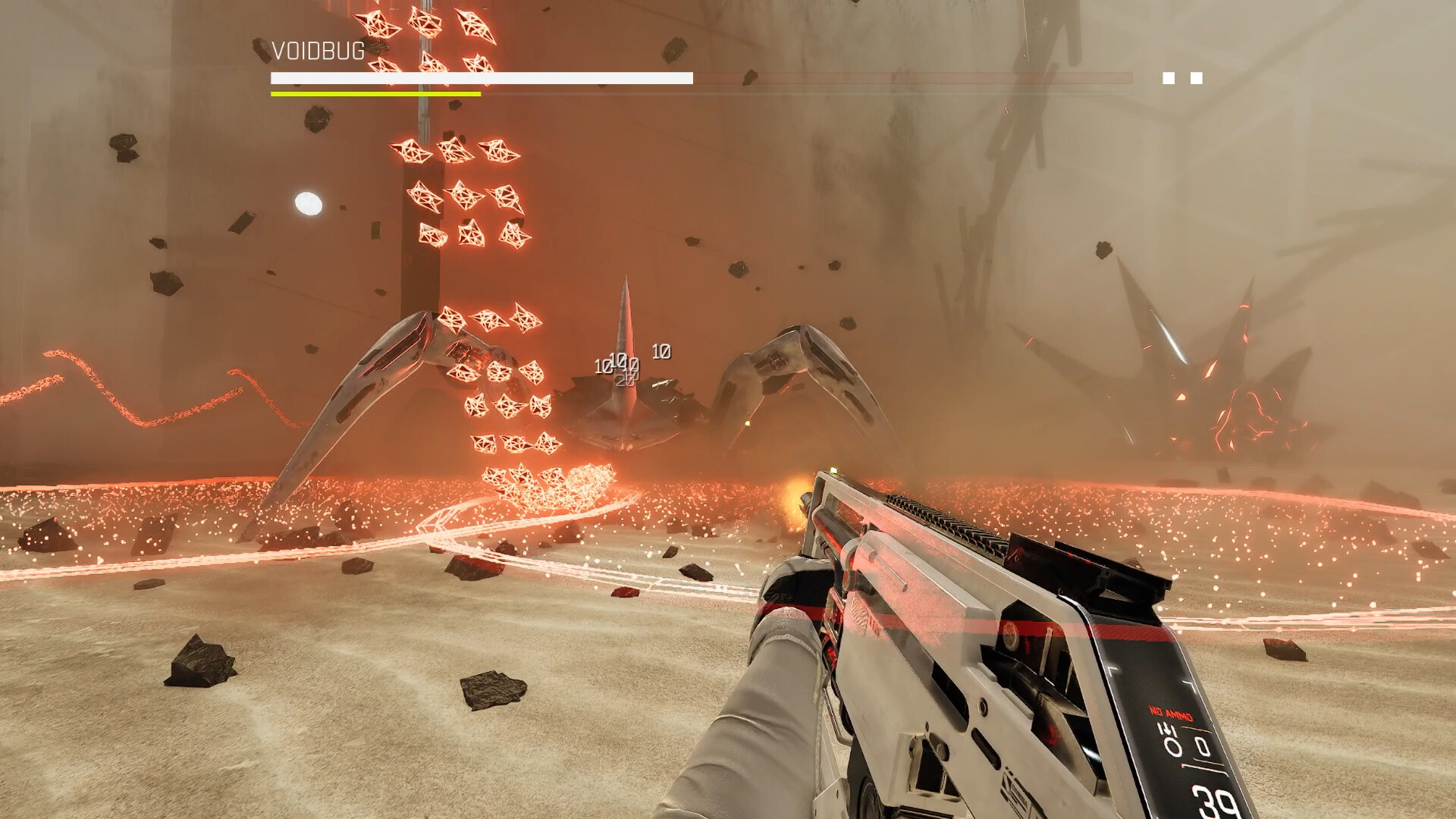
VOID/BREAKER leaves Early Access today, November 4, 2026, and it does not arrive quietly. The full 1.0 release lands on PC, PlayStation 5, and Xbox Series X and S on the same day, and it is day one on Game Pass. The price on PC and PlayStation 5 is 29.99 dollars. For a game built by one developer, that is a launch with no waiting room: no staggered console port months later, no "console version coming soon" footnote. Everyone gets the finished game at once.
That is the headline, but it is not the whole story. The interesting part is how a solo project got here at all, and what version 1.0 actually changes for players who have been following it since Early Access began in August 2025. This is a roguelite first person shooter about fighting machines controlled by a hostile AI, and its central idea is simple to state and hard to execute: you are trapped in a loop, you fight your way out, and when you die, you try again smarter.
The game in one minute
You play a prisoner of an all seeing, hostile AI, forced to fight, die, and repeat inside a shifting sci-fi facility. Each run sends you through arenas filled with machines, and death is not a full reset. Upgraded stats, suits, and weapon schematics carry over to the next attempt, so every failed run still teaches the next one something. That loop is the genre in miniature, and VOID/BREAKER leans into it hard.
Two systems do most of the work. The first is gun modding. You build weapons from parts and modifications, chasing combinations and synergies rather than picking a rifle off a rack and calling it a loadout. The developer describes the combinations as effectively limitless, which is marketing language, but the shape of it is real: the fun is in assembling a strange gun and finding out whether it works. The second system is destruction. Walls break, structures collapse, and cover is temporary. You can blast a new route through a room instead of taking the one the level gave you, and in a bullet hell shooter, that changes how a fight feels.
Movement is the third leg, and it matters as much as either system. This is a fast game by design, built around sprinting through gunfights, dodging incoming fire, and repositioning before the room fills up. If you like slow, tactical shooters, this is not your game. If you like shooters where speed is a survival tool, it is built for you.
What version 1.0 adds
Version 1.0 is not just a label change. It adds four new weapons, a new boss, new enemies, a new zone, and the conclusion of the story, plus more than 50 achievements. The new zone is Zone 06, the final stretch of the game, and it is where the story lands. For Early Access players, that ending is the real payload: the loop finally has a destination.
For console players, the important detail is that nothing here is a cut down edition. PlayStation 5 and Xbox Series X and S get the complete 1.0 game, including the final zone and the story conclusion, on the same day as PC. That sounds obvious, but it is not how these launches usually go. Early Access games often graduate on PC first and reach consoles later, sometimes much later, with the console audience asked to wait for a version that already exists. VOID/BREAKER skips that queue entirely.
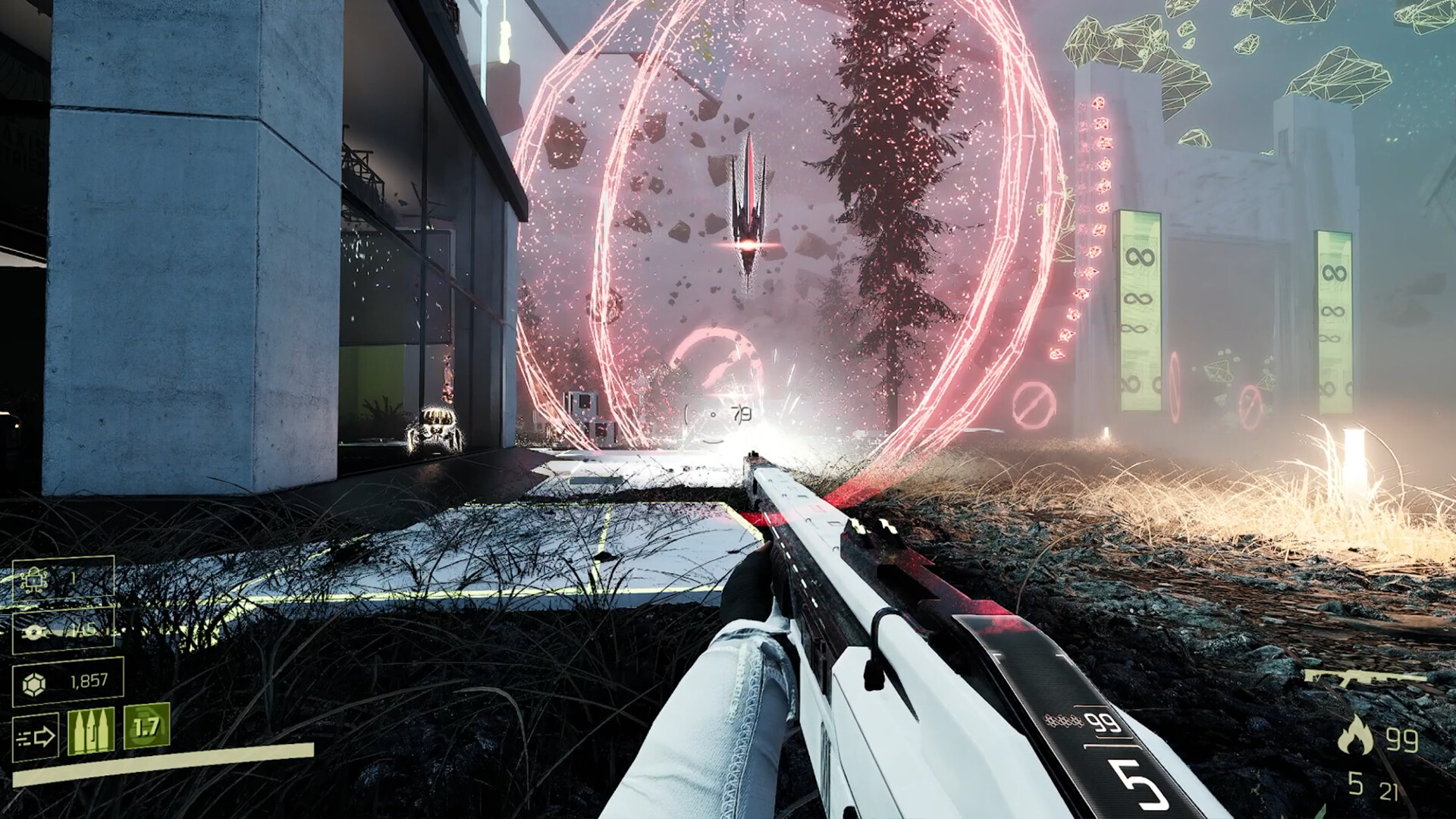
One developer, one very long runway
VOID/BREAKER is a solo project from Daniel Stubbington, working as Stubby Games, and published by Playstack. Stubbington previously made The Entropy Centre, a sci-fi puzzle adventure, which makes this something of a genre jump: from careful puzzle design to a fast roguelite shooter with bullet hell elements. That jump is worth noting, because the two games share a sensibility even when they do not share a genre. Both are built around systems that interact, and both trust the player to experiment.
The Early Access runway lasted about 15 months, from August 2025 to today. That is a long time to keep a community engaged, and the Steam numbers suggest it worked. The game holds a Very Positive rating on Steam, with 93 percent of more than 2,000 user reviews positive, and 91 percent of recent reviews positive. Those are not launch day numbers inflated by a single weekend. They are the accumulated verdict of players who lived with the game while it was still unfinished, which is a harder audience to please than a launch crowd.
There is also a quiet fairness story in the 1.0 terms. Anyone who bought the game on Steam in Early Access, or bought it before 1.0, automatically receives the Supporter's Pack at no extra cost. The pack is Steam only at launch, and it includes weapon chassis, the official soundtrack by Joe Ford, and an art book. The soundtrack is also sold separately on Steam. Early Access buyers took a risk on an unfinished game, and this is the publisher paying that risk back in a concrete way rather than a thank you note.
Why the Game Pass day one slot matters
Game Pass changes the math for a game like this. At 29.99 dollars, VOID/BREAKER is fairly priced for a finished roguelite shooter, but it is still an asking price in a month crowded with bigger names. On Game Pass, the asking price disappears. Subscribers on console, PC, and Cloud can try it with no purchase decision at all, and a roguelite shooter is exactly the kind of game that benefits from that low friction. Ten minutes is enough to know whether the movement clicks for you, and ten minutes costs nothing.
That is also why the console launch timing matters so much. A PC only graduation followed by a console port months later would have split the conversation in half. Instead, the Game Pass audience, the PlayStation audience, and the Steam audience all arrive on the same day, talking about the same version. For a solo developer, that is the best possible version of launch week: one conversation, not three staggered ones.
None of this guarantees a hit. The roguelite shooter shelf is crowded, and a strong Early Access rating does not automatically convert into a broad audience. Difficulty is a real filter here too, since a fast bullet hell shooter will bounce off some players in the first hour. But the conditions are about as good as a small game gets: a finished game, a fair price, a free trial path through Game Pass, and a community verdict that already exists before launch day.
What to watch next
The honest questions start now, not before launch. Does the 1.0 ending satisfy players who spent a year in the loop? Do the four new weapons open up genuinely new builds, or do they fill out a roster that already had its favorites? And does the console version hold up under the same fast combat that PC players praised? Those answers will come from players, not from launch announcements, and they are worth waiting for before declaring this a classic.
For now, the story is simpler, and it is a good one. A single developer built a fast, strange shooter about breaking out of a machine's loop, spent 15 months refining it in public, and shipped the finished version everywhere at once. In a year full of studio closures and cancelled projects, a launch like that is worth noticing. Go break something.
- Launch: November 4, 2026, version 1.0, leaving Steam Early Access.
- Platforms: PC (Steam), PlayStation 5, Xbox Series X and S, plus Game Pass on console, PC, and Cloud.
- Price: 29.99 dollars on PC and PlayStation 5.
- 1.0 additions: four new weapons, a new boss, new enemies, a new zone (Zone 06), the story conclusion, and more than 50 achievements.
- Developer: Daniel Stubbington (Stubby Games), published by Playstack.
- Steam verdict: Very Positive, 93 percent of more than 2,000 reviews positive.
Images: Stubby Games and Playstack, official Steam screenshots.
More from GameNow TV: GameNow TV on YouTube.