Warzone Season 1 Is a New Map, a New Platform, and the End of the Line for PS4 and Xbox One
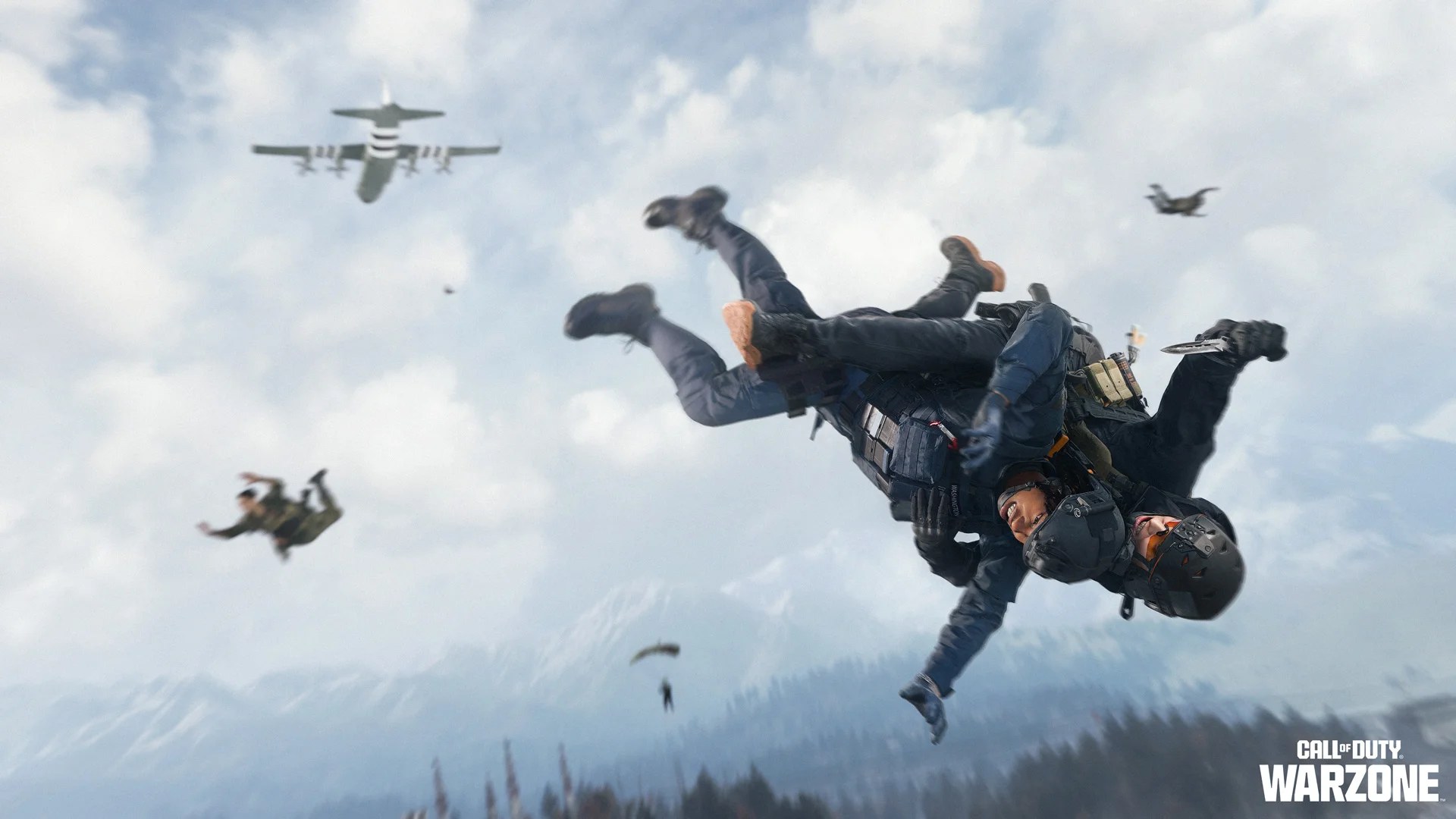
Call of Duty: Warzone Season 1 went live at midnight Eastern on November 6, and it is the biggest rebuild the mode has had since Warzone 2.0 arrived in 2022. Two new maps, 33 new weapons, a level reset, and a platform swap all land on the same day, and the mode will not look the same on either side of the generational line.
Okay, so. Seasons usually bring a map or a mode and call it a day. This one brings a new Battle Royale map and a new Resurgence map at the same time, folds the whole game into Modern Warfare 4, launches on Nintendo Switch 2, and shuts the PlayStation 4 and Xbox One versions down for good. That is not a content drop. That is a changing of the guard, and it deserves a closer look than a two minute video allows.
Hajin: Warzone finally goes to Korea
Hajin is the first Warzone map set on the Korean Peninsula, and it is built around the Modern Warfare 4 campaign story. Players who ran the DMZ mode will recognize parts of the terrain, but the Battle Royale version is its own thing: a large scale map that stretches across both North and South Korea, with 13 major points of interest.
The geography is doing real work here. Hajin City packs towers, barricaded roads, and fortified positions into the center of the map, which rewards squads that move together and lock down angles. Out in the countryside, Imjin Farmland opens everything up, and long range fights become a test of patience and cover discipline. Cross the border and the tone changes again: the 14th Political Prison, Chang-san Air Base, and Deadtown on the North Korean side give the map a second identity, and the Hanuel Nuclear Reactor sits in the middle of it all without the radioactive cloud DMZ players remember.
Then there is the weather. Hajin runs variable weather patterns across matches, from clear skies to fog, wind, rain, and distant storms. Activision says visibility was a design priority no matter the conditions, which is the right call: a fog roll that blinds half the lobby would be a gimmick, not a feature.
The new Gulag is worth a mention too. Eliminated players fight their 1v1 in one of two variants of the Hajin Gulag, and for the first time you can watch from ground level while you wait your turn. The Gulag stops feeling like a waiting room and starts feeling like part of the match.
Some history helps here. Warzone has cycled through Verdansk, Caldera, Al Mazrah, and Urzikstan since 2020, and Verdansk itself came back in April 2025. Every one of those maps defined an era of the game. Hajin is the first one designed from the start as an extension of a campaign narrative, not just a new backdrop. That is a bet that story and setting can carry a Battle Royale map the way nostalgia carried Verdansk. We will know within weeks whether it pays off.
Zodiac: Resurgence gets a drone factory
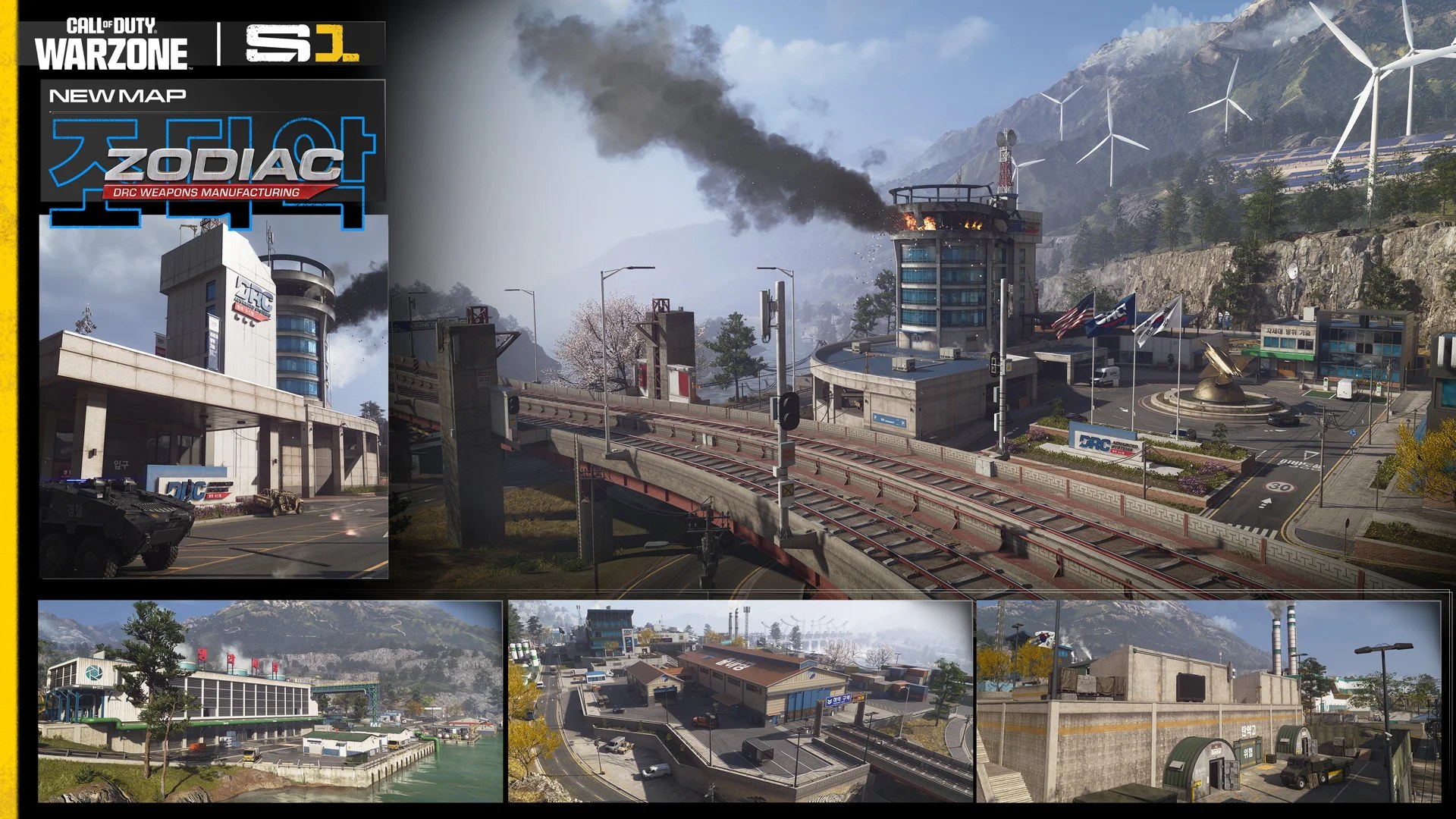
If Hajin is the wide open statement, Zodiac is the tight, fast counterpoint. The new Resurgence map is built around the DRC Advanced Systems drone assembly and manufacturing headquarters in South Korea, and it was developed by Beenox in close collaboration with Infinity Ward, the team behind Rebirth Island and Vondel.
Ten points of interest fit inside one industrial complex: Admin, the central tower; Trackline, where trains run a double railway across the facility; Furnace, built around heavy manufacturing equipment; and Solar, Old Mines, Dispatch, Depot, Sentinel, Cooling, and R&D filling out the rest. The map mixes factory interiors, research labs, rooftops, and underground tunnels, and the environment fights back a little: moving trains, moving solar panels, furnace conveyor belts, and explosive fuel barrels all give squads ways to turn the terrain on each other.
Resurgence has always lived or died on rotation speed, and Zodiac looks built for exactly that. Short sightlines, vertical layers, and tunnels that let a squad vanish and reappear behind you. If Hajin is where you plan, Zodiac is where you react.
The platform swap: Switch 2 in, PS4 and Xbox One out
Here is the part of Season 1 that will matter longest, and it has nothing to do with a map. Warzone launched in March 2020 on PlayStation 4 and Xbox One. Six and a half years later, those versions stop working entirely. Not deprecated, not frozen on an old patch: unplayable. Activision pulled the game from the last gen digital stores on June 4, 2026, closed the in game store on those consoles on June 25, and Season 1 finishes the job.
Your progress is not lost. It carries over to a supported platform through the same linked Activision account, and that is the right way to handle a cutoff like this. But the message is blunt all the same: Modern Warfare 4 never shipped on last gen hardware, and Warzone has now followed it off. This is the cleanest generational cut Call of Duty has ever made, and it frees the developers from building around 2013 hardware.
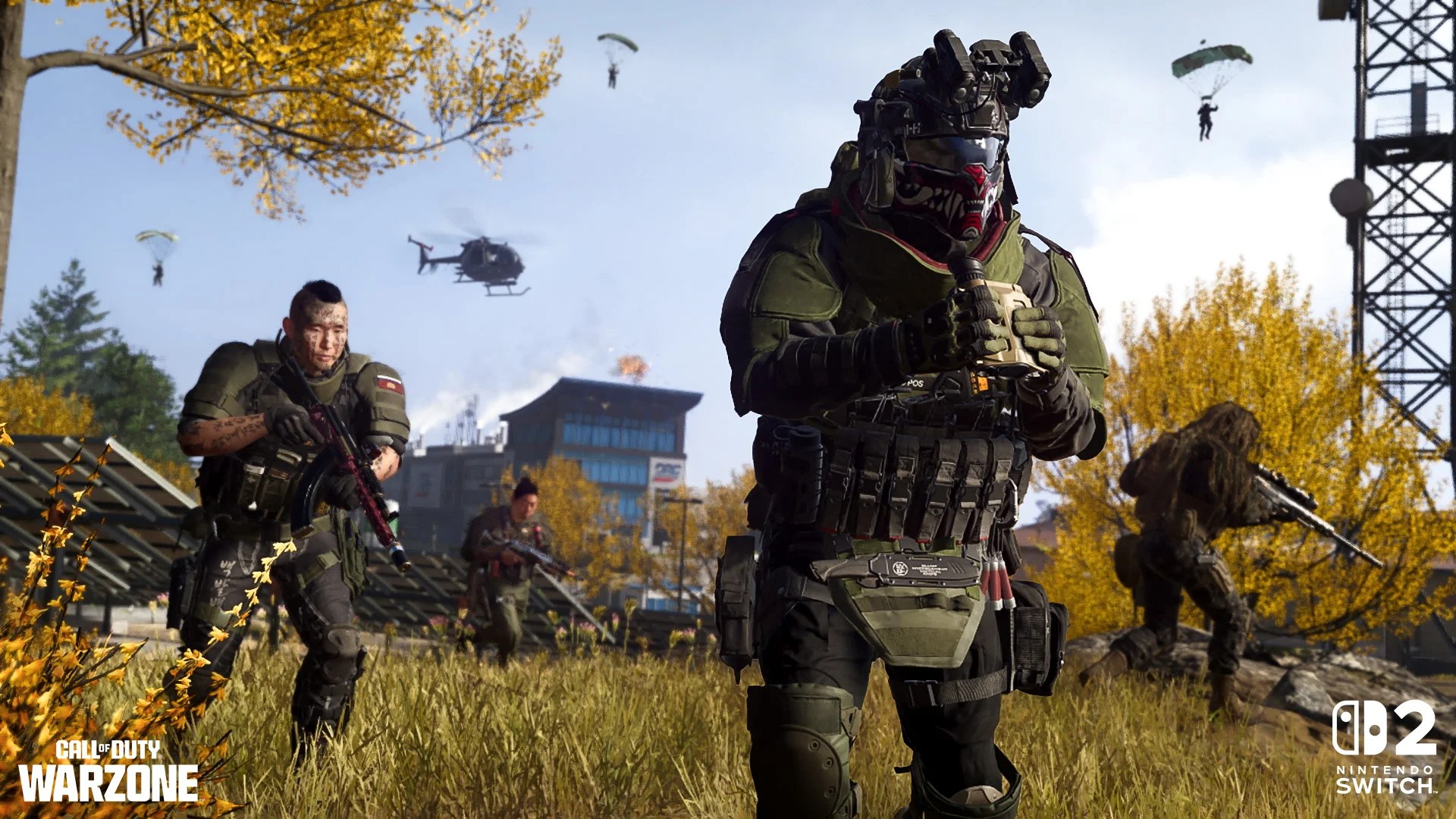
On the other side of the swap, Warzone arrives on Nintendo Switch 2 for the first time, free to play, with Hajin, Zodiac, and the other maps and playlists. That is a real audience expansion, and it puts a full scale Battle Royale on a handheld Nintendo system for the first time. The honest caveat is performance: nothing in the announcement sets a frame rate or resolution target, and a portable Warzone lives or dies on how it actually runs.
What the Modern Warfare 4 integration actually changes
Season 1 fully integrates Modern Warfare 4 into Warzone, and the systems changes are bigger than the map list. Player levels reset, with Prestige available across Multiplayer, DMZ, and Warzone. All 33 Modern Warfare 4 launch weapons arrive, each with Weapon Prestige and Warzone Mastery Camos to chase. Tactical Sprint is now available to every operator without a perk, with a slightly shorter duration, and you can drag allies while reviving them, pulling them out of danger instead of standing still and hoping.
The new gear is built for movement. The Zipline Launcher fires an anchor and creates a zipline the whole squad can use, including enemies, so placement matters as much as the escape itself. The Grabber Drone can pick up loot, environmental objects, and even other operators, which means it can haul a downed teammate back for a revive or steal a Buy Station drop from an awkward spot.
Carry Forward is the quiet system that will matter most to long term players. Operators, skins, weapon blueprints, calling cards, emotes, and finishing moves from Modern Warfare 2, Modern Warfare 3, Black Ops 6, and Black Ops 7 all carry into Season 1. Older weapons live in a Legacy tab: still usable, but locked out of Gunsmith editing, Mastery Camos, and the Modern Warfare 4 customization features. Each legacy base weapon gets a five attachment version, and legacy blueprints unlock through player XP in the Armory. It is a compromise, and a fair one: your collection survives, but the new arsenal is the one the game is built around now.
Modes at launch cover Battle Royale and Resurgence with Casual variants for each, plus Rally Point, Massive Resurgence, and Loaded Resurgence. Mid season adds Extreme Resurgence and Rockets and Snipers. The nostalgia play is scheduled, not immediate: Verdansk returns later in the season with new landmarks like the Signal Station, the Grazna-7 Launch Complex, the Overlook skyscraper, and Drone Labs, and Rebirth Island comes back too.
Why this season matters
Warzone has spent the last few years iterating, and iteration has a ceiling. New weapons and balance passes keep a game alive, but they do not bring squads back. Two new maps on day one, a full integration with the new premium title, and a hard break with last gen hardware: that is the kind of reset that actually changes who logs in.
The risks are real and specific. Hajin has to hold players until Verdansk returns, and a map tied to a campaign narrative has to survive contact with a player base that mostly does not care about the story. The Switch 2 version has to run well enough that the handheld audience sticks around past week one. And the level reset, which is exciting for grinders, always costs a few casual players who do not want to start over.
But the shape of the season is right. A big map for the planners, a fast map for the reactors, the old favorites held in reserve, and a platform lineup that finally matches the hardware people actually own. On paper, I rate this season an 8 out of 10. The other two points get decided on the ground, in Hajin, starting today.
Images: Activision, official Call of Duty blog.
Watch the video version: GameNow TV News, Nov 6
More from GameNow TV: GameNow TV on YouTube.